B2B Healthcare · Care facility operations · 0→1 SaaS
PANDO: designing a 0-to-1 SaaS healthcare platform
How user-centric design transformed emergency monitoring into a trusted daily workflow, generating €100k ARR in the first year.
OVERVIEW
MEASURED IMPACT
€100k ARR
Generated in the first year post-launch.
+50% frontline adoption
Achieved from OSS operators after the redesign.
9.5/10 NPS
Score from facility directors during beta deployment.
Improved quality of elderly care
By reallocating night-shift hours to daytime assistance
SCOPE AND ROLE
Role
Product Designer (0→1). Led the entire end-to-end product design, from early product strategy and field research to UI and scalable design systems.
Product
B2B SaaS in Healthtech. Monitoring platform for Italian residential care facilities (RSA), transforming sensor data into actionable alerts and insights.
Contributors
1 Product Manager, 1 Product Designer (me), 2 Software Engineers
Key skills
0→1 Product Strategy, B2B System Architecture, Scalable Design Systems, Field Research
Year
2025
Timeline
6 months
CHALLENGE
THE CONTEXT
PANDO launched in 2024 using a third-party MVP to validate demand quickly.
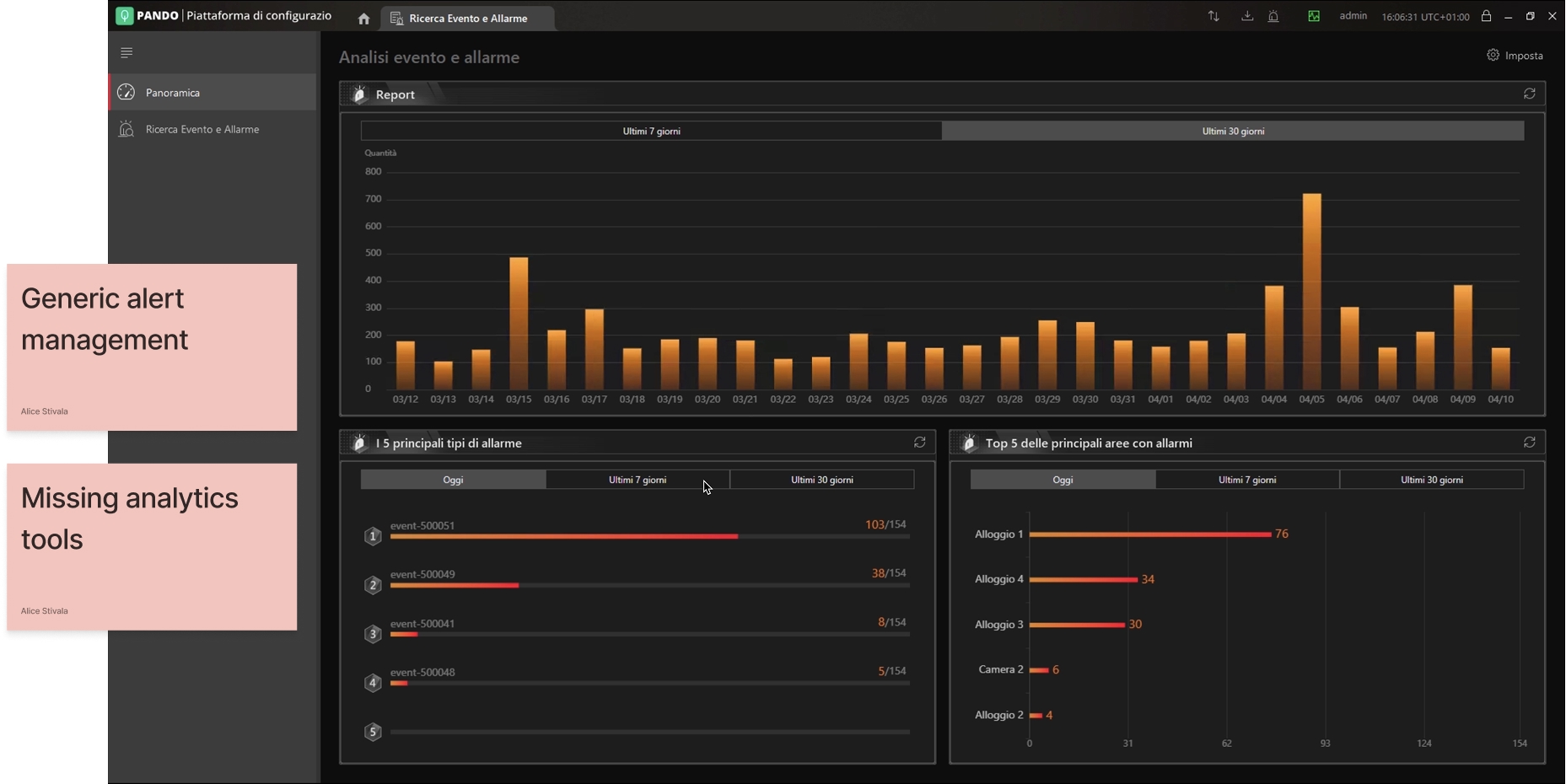
The strategy worked: demand was immediate. But six months of real-world usage revealed a critical flaw.
The licensed software was built for home security, not healthcare.
Field research and support ticket analysis showed that:
- the interface was unsafe and unusable for non-technical care staff
- directors lacked the analytics needed to understand value and justify adoption
To scale responsibly and deliver real care value, we had to build our own platform.
The limits of the third-party MVP.
DESIGN CHALLENGES
01. Adoption (staff)
Transforming a perceived “surveillance tool” into a trusted daily support system.
02. Value (directors)
Proving ROI without adding friction to frontline care workflows.
03. Scalability
One interface for facilities ranging from 5 to 300+ beds.
STRATEGY
01. KEY INSIGHT
Value flows from adoption
In data-driven B2B healthcare, management value originates upstream. It relies entirely on consistent and trusted frontline usage. Without reliable input from daily care workflows, analytics remain empty, regardless of dashboard design quality.
02. SYSTEM BREAKDOWN
The value chain was blocked
The third-party MVP suffered a structural failure. Frontline staff avoided the system due to perceived surveillance, leaving directors with incomplete data flows. The failure was systemic: input and output were disconnected, breaking the cycle of value generation.
03. DESIGN DECISION
Fix the input, unlock the system
To restore value, the design focus had to move upstream. I prioritized the frontline experience to remove friction in high-pressure moments.
By simplifying triage and reducing manual reporting, the platform rebuilt trust at the point of data creation, allowing meaningful information to emerge for management.
04. DESIGN PRINCIPLE
Adoption precedes analytics
Operational insight requires designing trust and usability for those generating the data first.
In B2B healthcare products, user adoption serves as the absolute foundation of business value.
SOLUTION
The proprietary platform was designed to unlock adoption, data quality, and operational value as a single system.
Rather than treating usability and analytics as separate problems, every design decision reinforces the same end-to-end flow: from frontline action to management insight.
01. VISUAL GRAMMAR
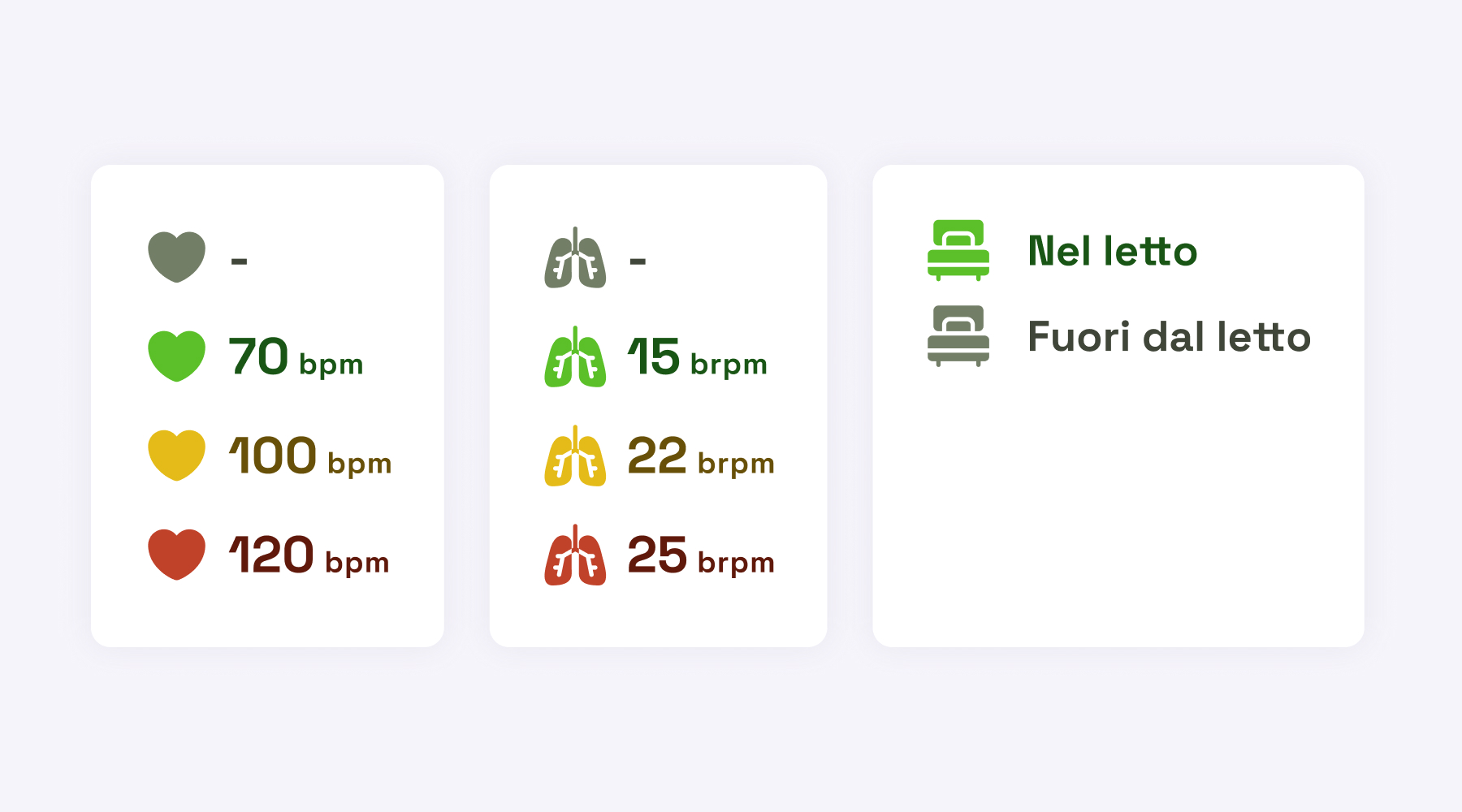
Enabling instant understanding for low-tech users
I established a strict, semantic visual grammar to translate complex sensor data into immediate signals. This color-coded system allows non-technical staff to understand status and priority at a glance, reducing the need to interpret dense interfaces.
By lowering cognitive load in high-pressure situations, the interface supports faster and more confident decision-making during daily care routines.
"Much more intuitive.
With colors, at a glance you see who needs attention."
— Administrative Officer, Public Agency in Emilia-Romagna (110 beds)
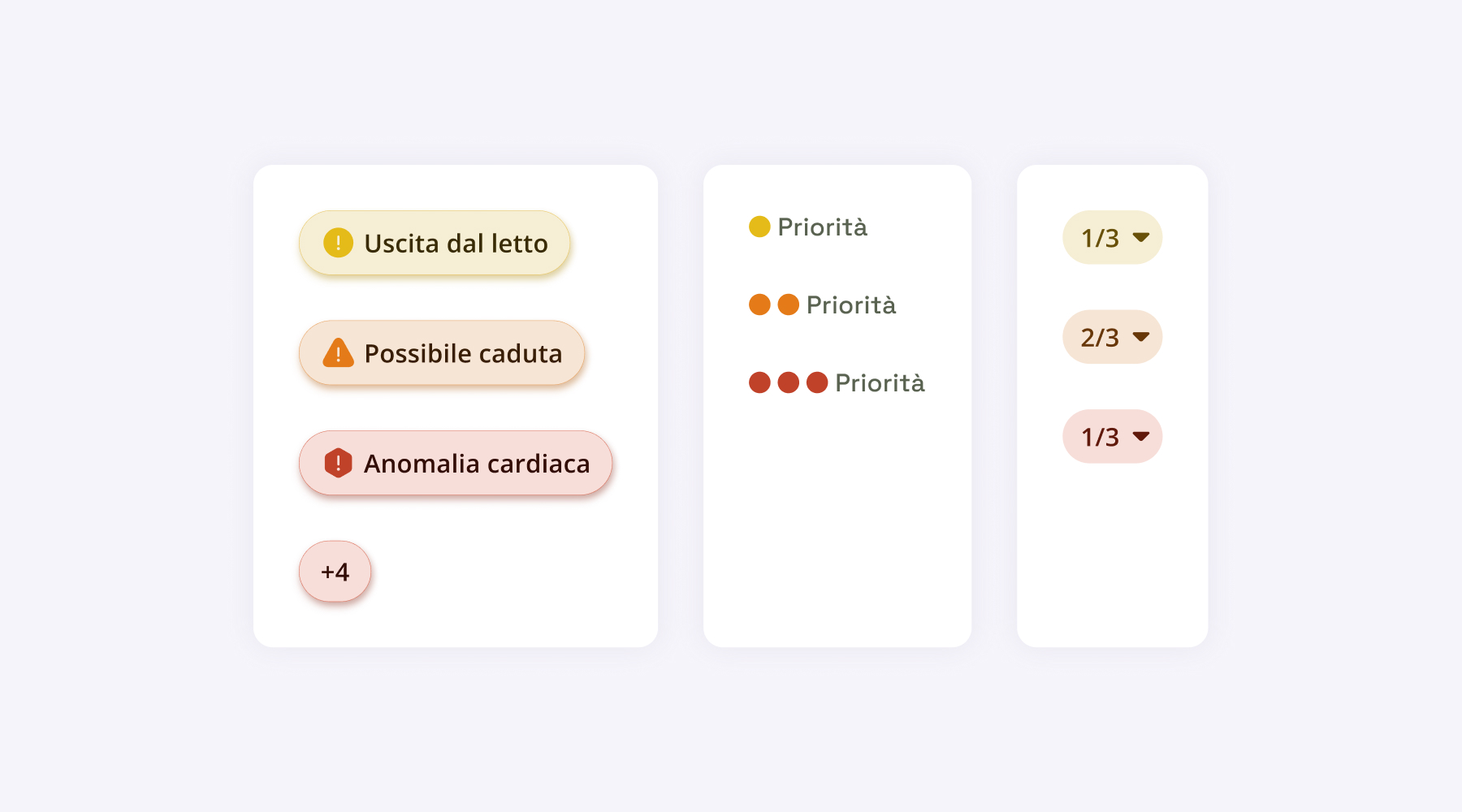
02. FRONTLINE WORKFLOWS
Designing for adoption at the point of care
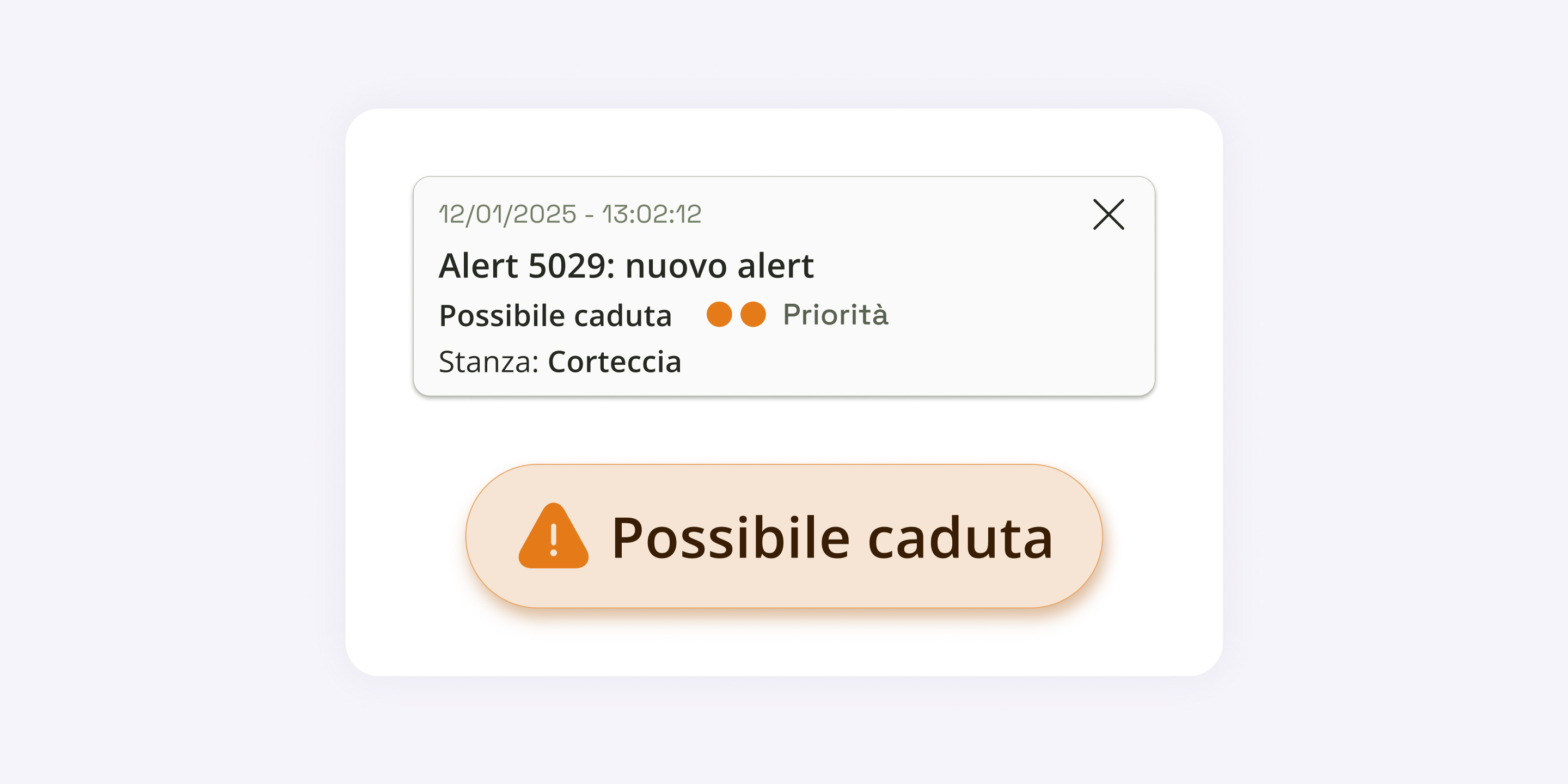
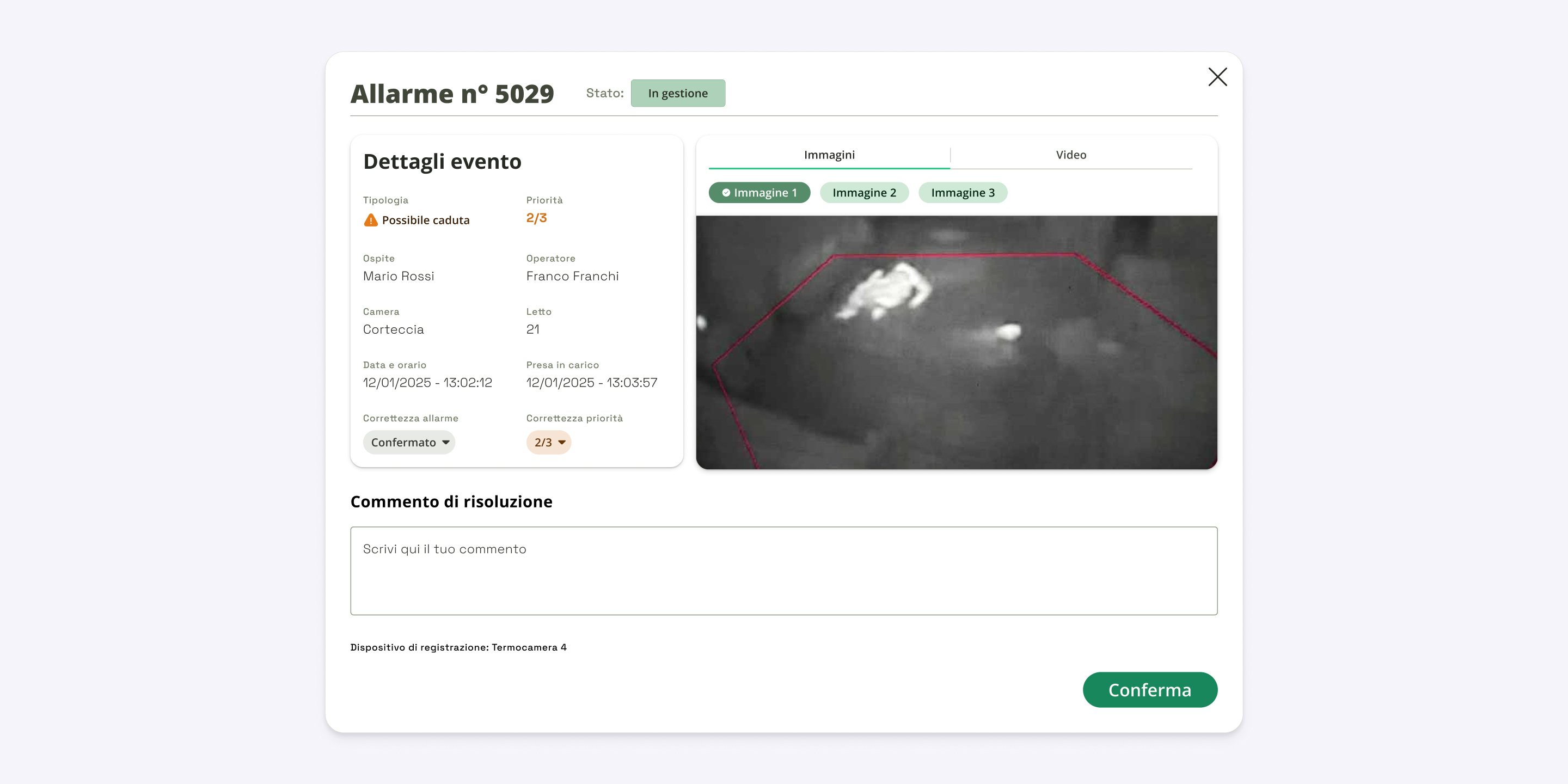
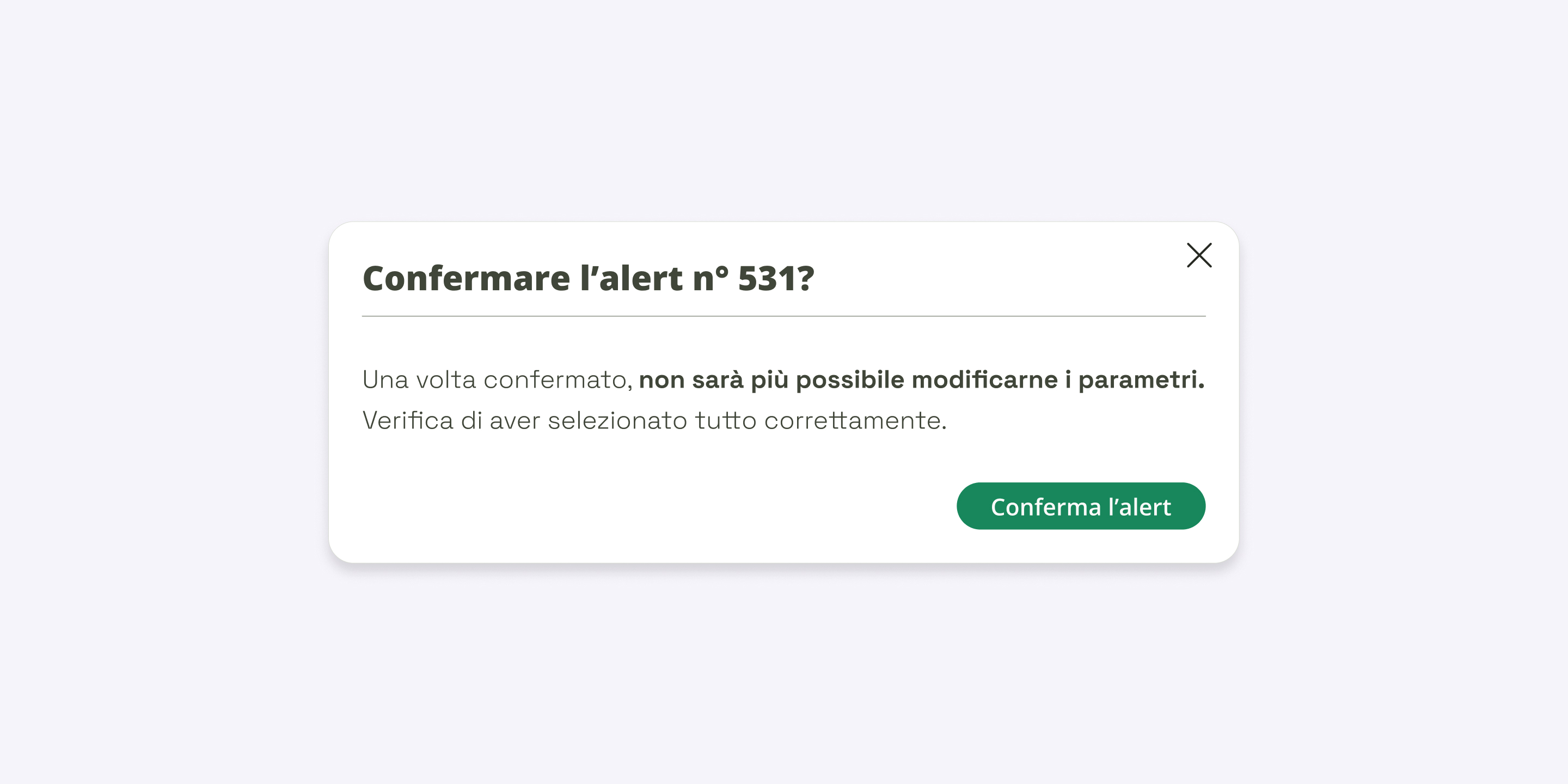
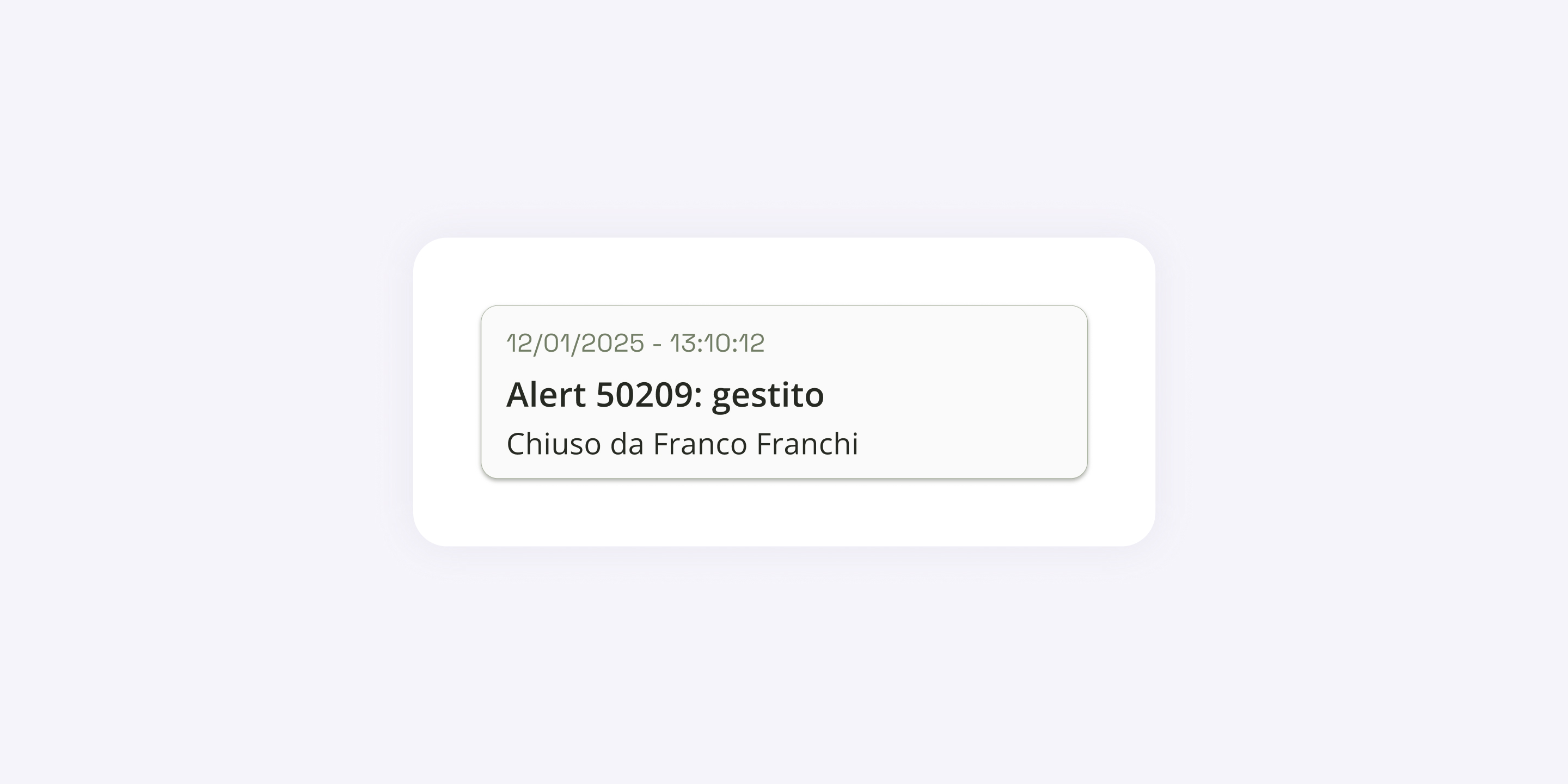
To enable sustained adoption, I designed workflows around the realities of frontline work: interruptions, time pressure, and shared responsibility.
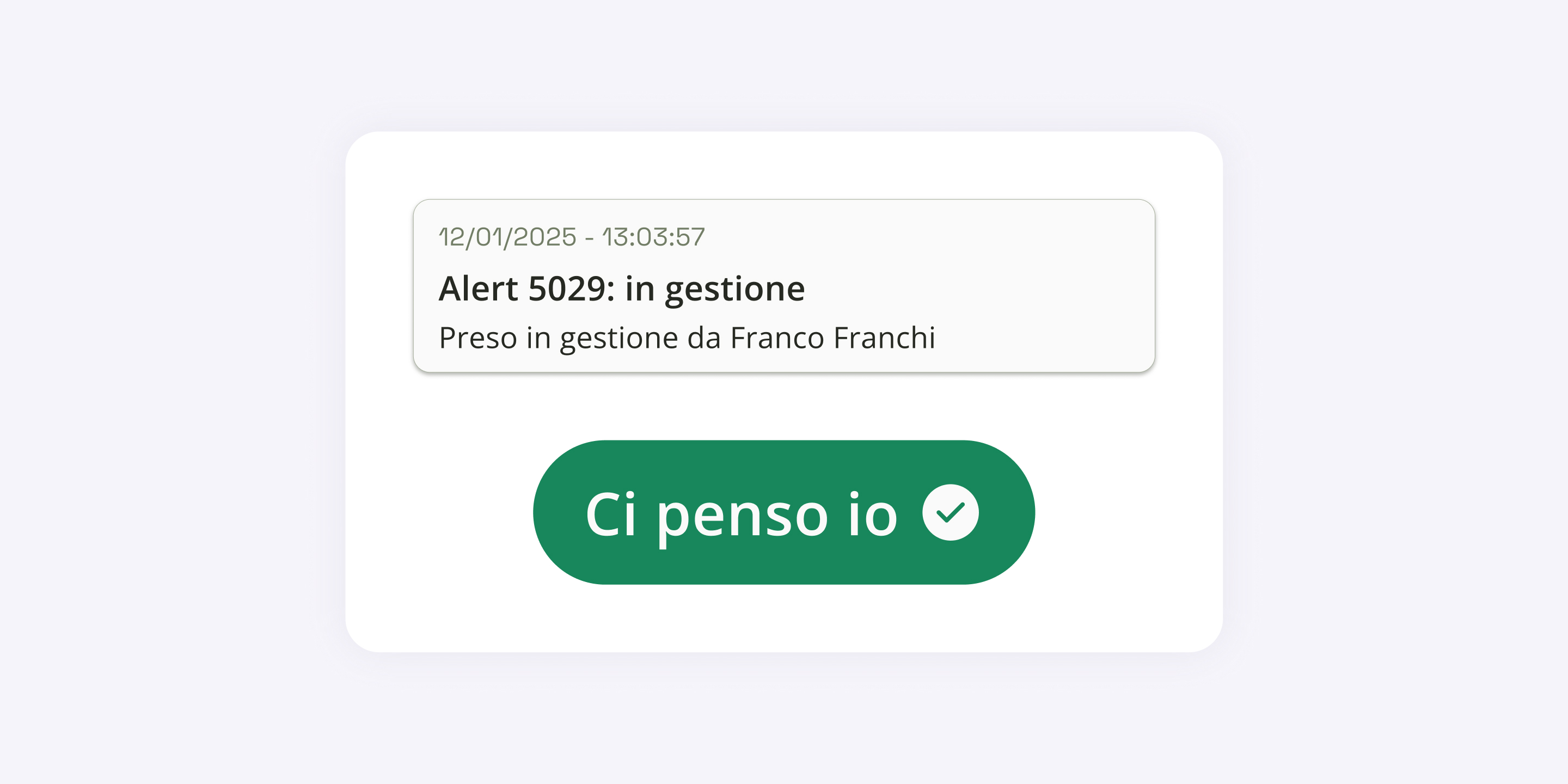
The new triage flow makes ownership immediately visible. Operators can quickly understand who is responsible for an intervention, reducing ambiguity and preventing duplicated actions. This shifted the platform from a monitoring tool to an active support system, making daily usage sustainable over time.
"Ci penso io is extremely fast and every RSA should implement PANDO."
— OSS Healthcare Operator, RSA in Tuscany (80 beds)
03. OPERATIONAL INSIGHTS
From frontline activity to operational visibility
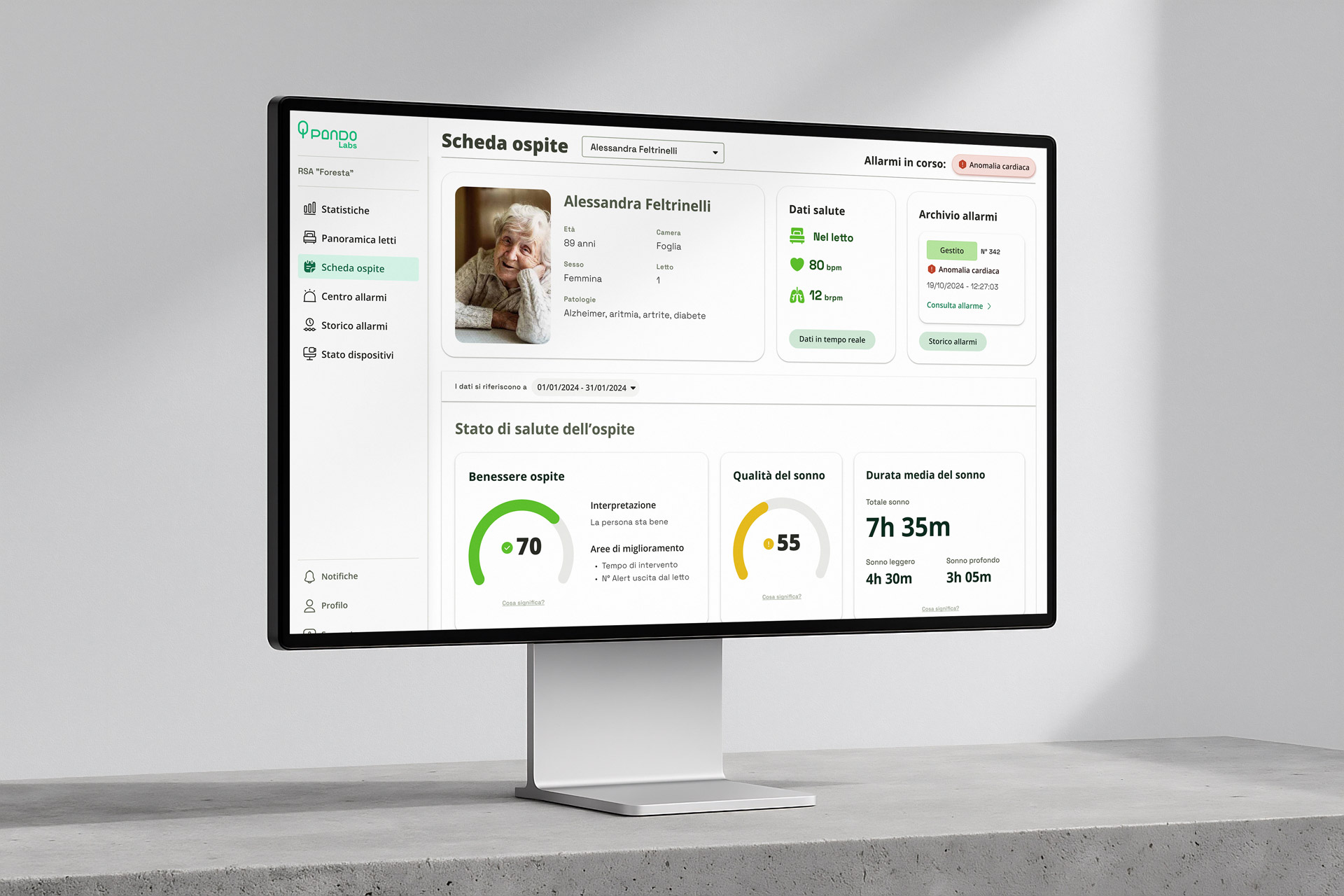
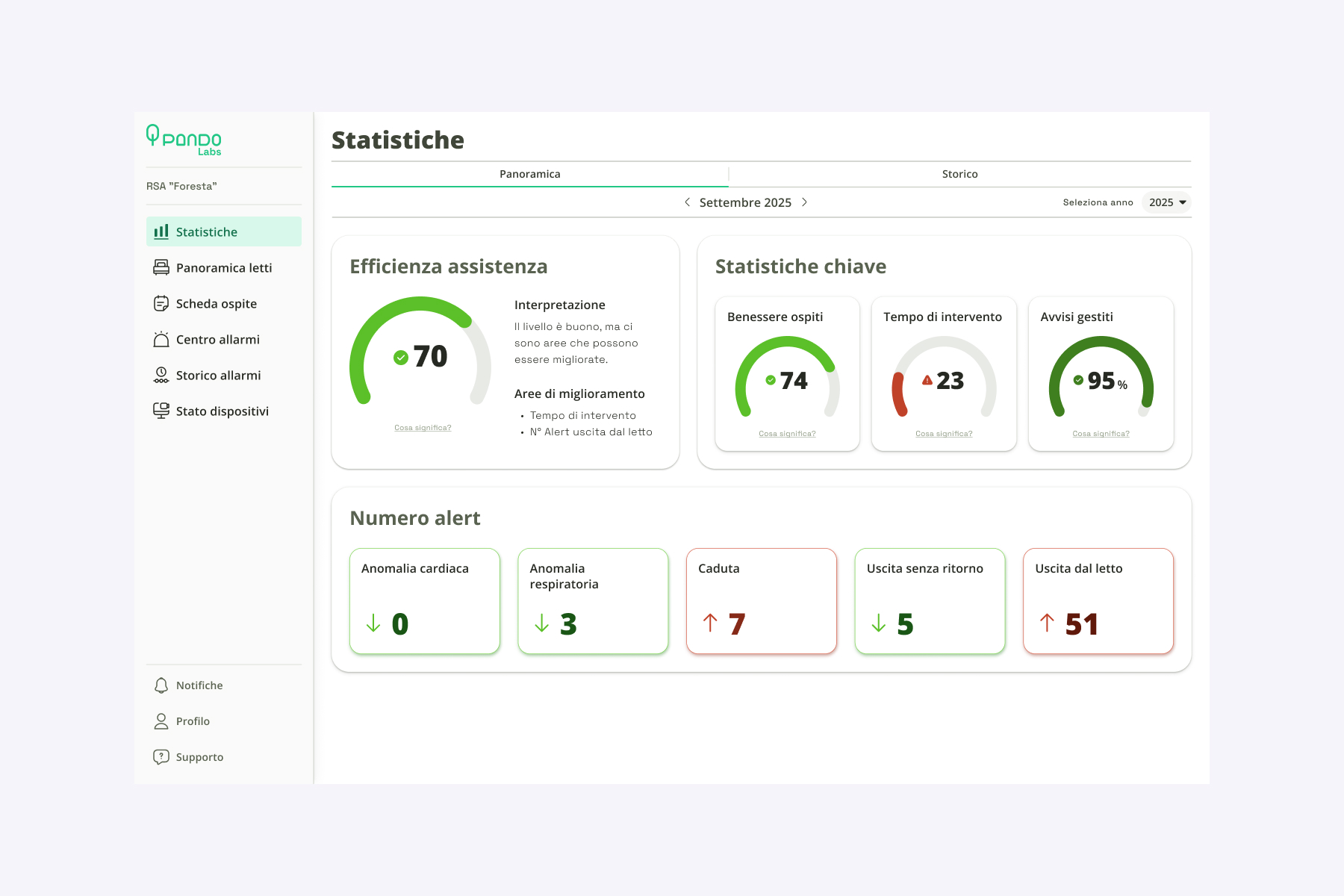
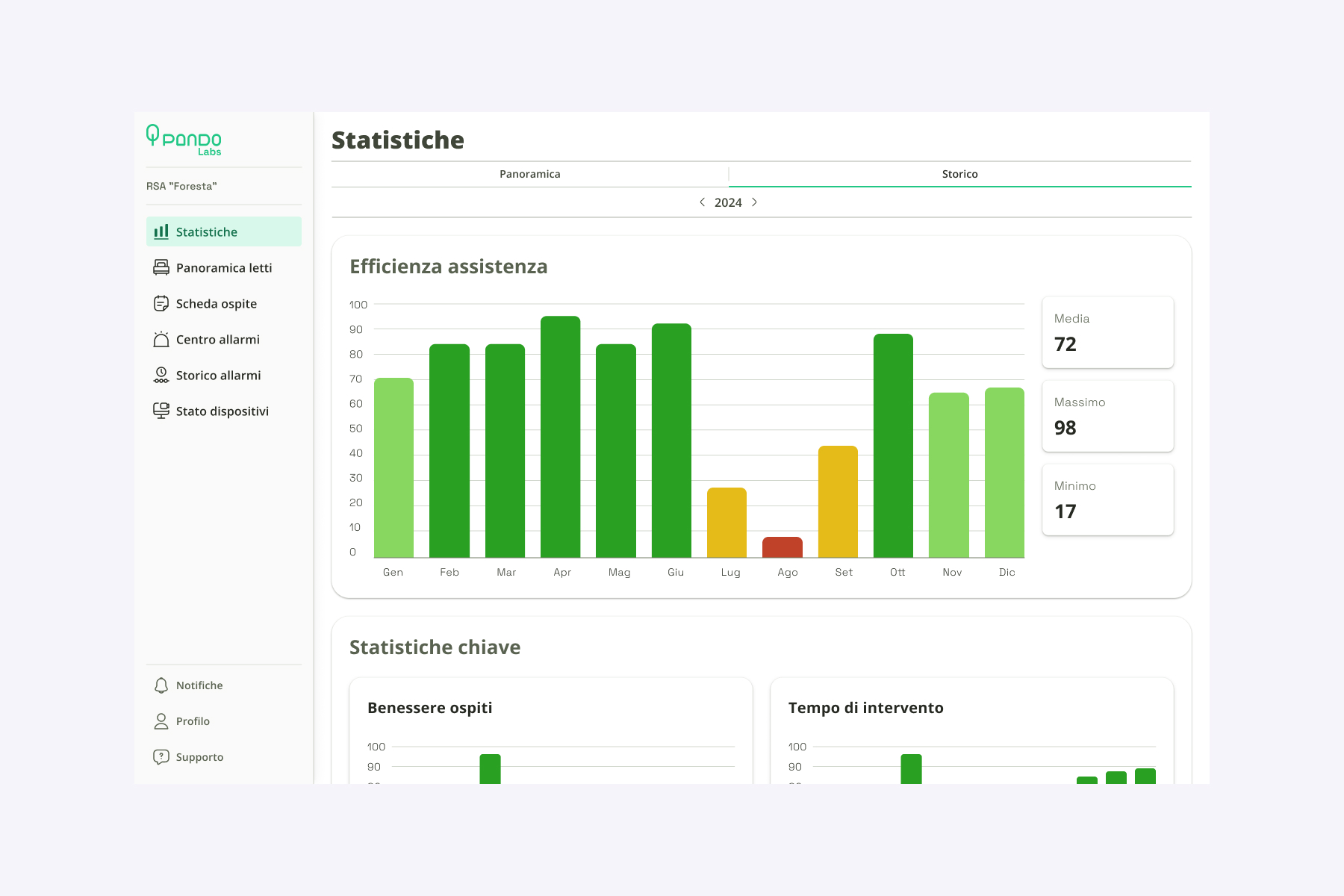
Once frontline workflows were adopted, the platform unlocked real-time visibility for directors without adding administrative burden.
At a glance, directors can assess:
- Overall care efficiency through a synthesized score
- Key safety indicators such as intervention time and handled alerts
- Historical distribution of alert types across months
Textual interpretations attached to the efficiency score highlight areas for improvement, guiding non-technical managers toward potential operational bottlenecks.
By structuring raw event data into consistent, comparable signals, the system supports informed decisions while keeping the interface lightweight.
“With this kind of reporting I can advocate for more funding”
— Director, RSA in Tuscany (80 beds)
04. SCALABLE INTERACTION
Adapting to complexity and context
Scalability was addressed through adaptive information architecture.
Information density shifts by role: frontline staff interact with focused operational views, while directors access deeper analytics. This prevents cognitive overload for daily users while preserving control for decision-makers.
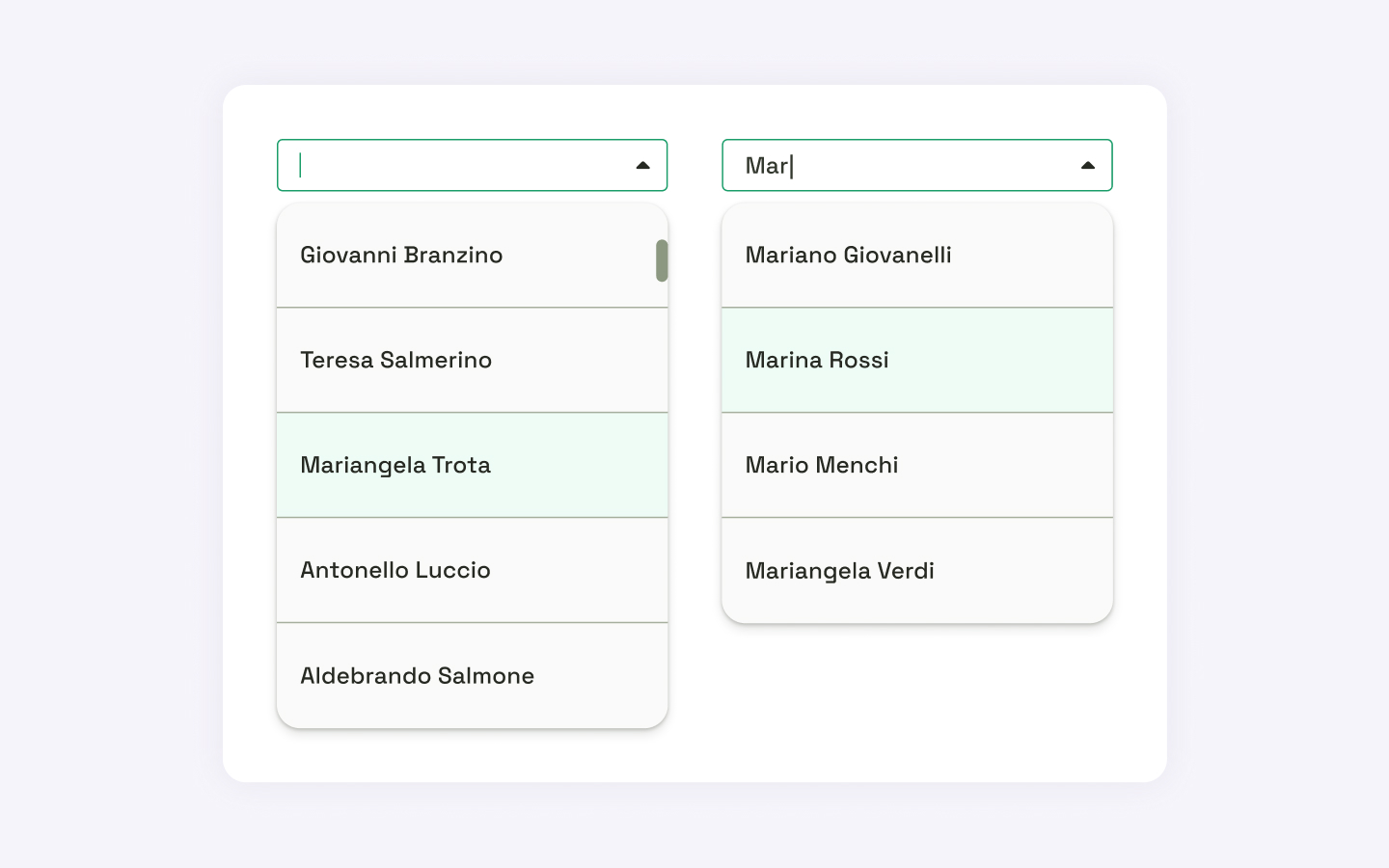
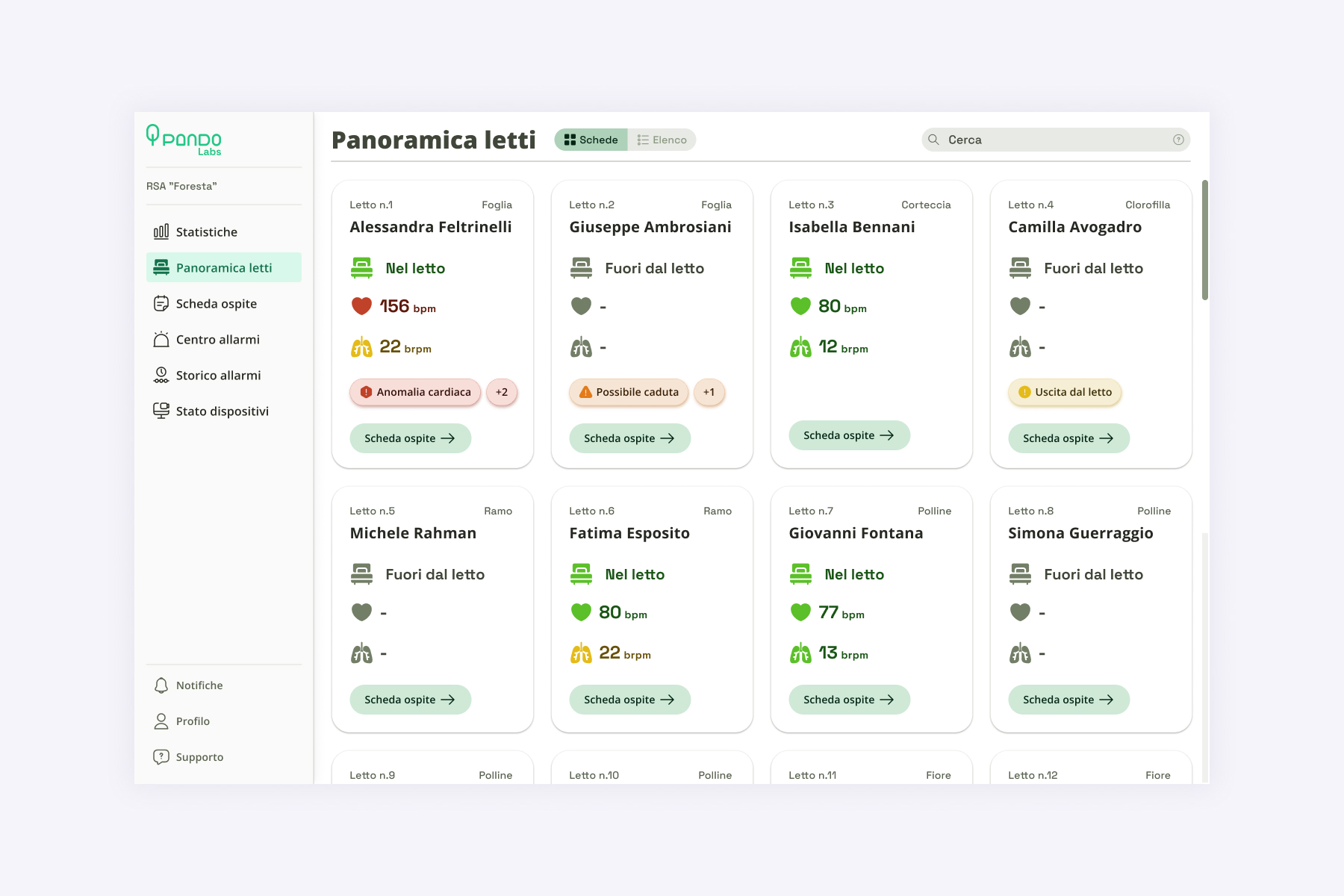
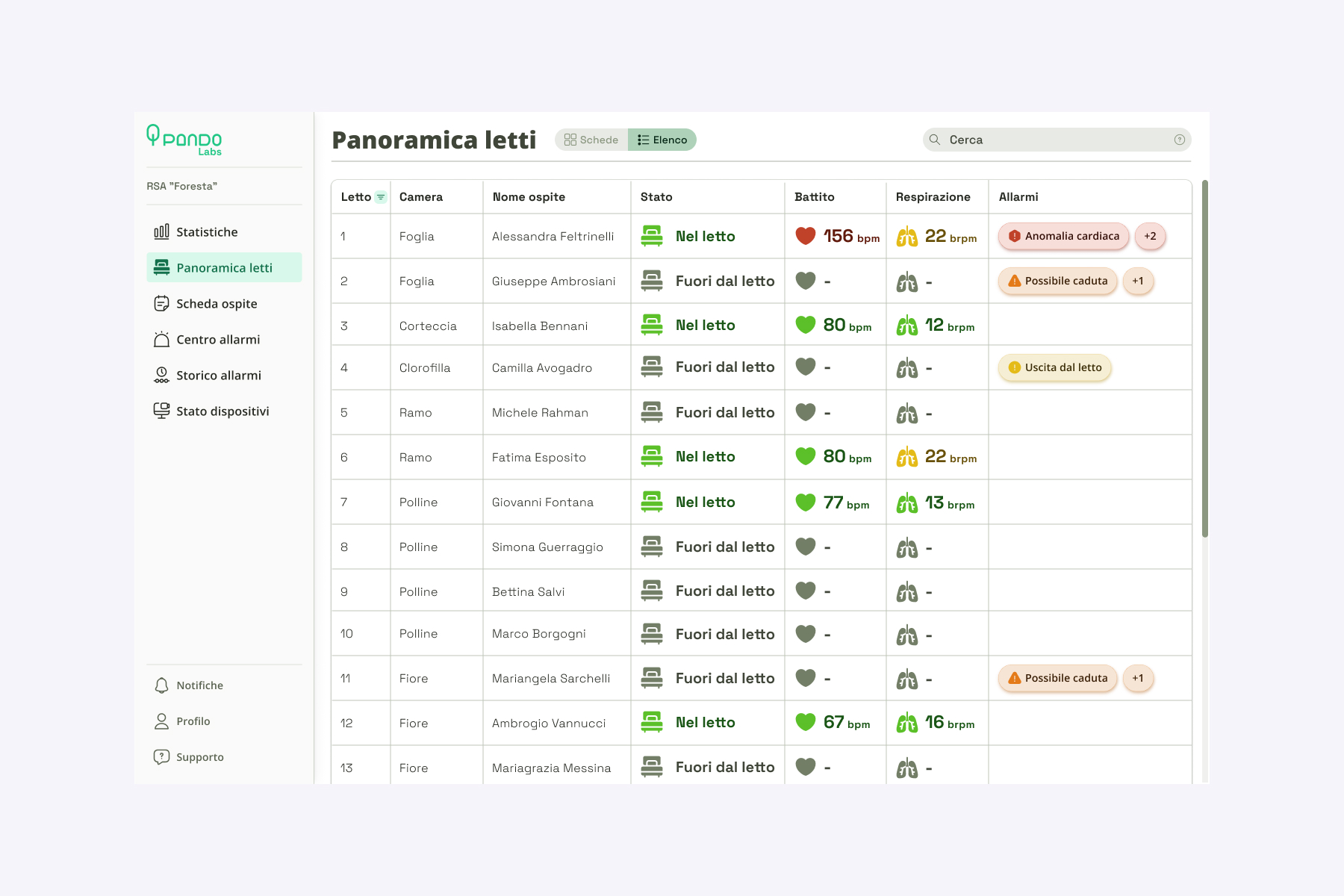
Navigation patterns also scale with context. Card-based views support recognition in smaller facilities, while list-based views enable efficient scanning in large organizations. Within resident profiles, a unified search-and-select interaction ensures fast access regardless of resident volume.
INTERACTIVE PROTOTYPE
IMPACT
From validation to scalable growth
The platform successfully replaced the MVP, scaling from a pilot project to the operational standard for organizations of varying complexity.
01. BUSINESS OUTCOMES
By solving the input block at the frontline level, the platform became immediately viable for sale.
- Generated €100k ARR within the first year.
- Achieved a 9.5/10 NPS from directors, validating the shift from "surveillance" to "operational insight."
02. OPERATIONAL SHIFT
The most significant win wasn't just adoption, but the type of adoption. Frontline staff moved from avoiding the tool to using it for faster triage and coordination.
This efficiency allowed facilities to reallocate night-shift hours to daytime assistance, directly improving the quality of care for residents without increasing headcount.
We were able to move staff hours from night monitoring to daytime assistance, directly improving the quality of life for our residents.
— Director, RSA in Tuscany (80 beds)
Selected Works